By Raghu Kulkarni, CEO, IDrive Inc.
If you zoom in on a digital photo, eventually you hit a limit—pixels. You cannot store more detail than the pixel grid allows. Physics has long suspected that the universe has a similar limit: a maximum amount of information that can exist in a given space.
For a century, we’ve assumed this ”resolution limit” is simply the Planck Length. But we never asked how that information is packed.
In the Selection-Stitch Model (SSM), we propose that the vacuum isn’t just empty void, but a medium with a specific information density limit. Just as you can pack more oranges in a box by stacking them in a specific pattern, Nature packs quantum information in the most efficient way possible.
1. The Geometry of Quantum Information: Why 0.77lP?
You don’t need to believe space is made of tiny, static cubes to accept this. You only need to accept that Nature is efficient. When you try to pack the maximum amount of ”quantum data” into a volume, the mathematical limit of that density behaves as if it were a specific crystal shape: the Face-Centered Cubic (FCC) lattice.
Because of this dense packing efficiency, the ”effective” distance between information points isn’t 1.0 Planck Lengths. It is tighter. By calculating the density of this informational limit in our paper on Geometric Renormalization, we derived a new fundamental constant:
The Geometric Vacuum Constant ≈ 0.77 × PlanckLength (1)
This is the Bit-Rate of the Universe. It explains why gravity is so weak—it is the residual ”noise” of a system that is 99.99% optimized for information storage.
2. The ”Bandwidth” Limit: Why You Can’t Walk Through Walls
This informational approach also solves the mystery of the quantum-to-classical transition. In standard physics, we don’t know why an electron can be a wave and a particle at the same time (superposition), but a human cannot.
The SSM suggests this is a bandwidth problem.

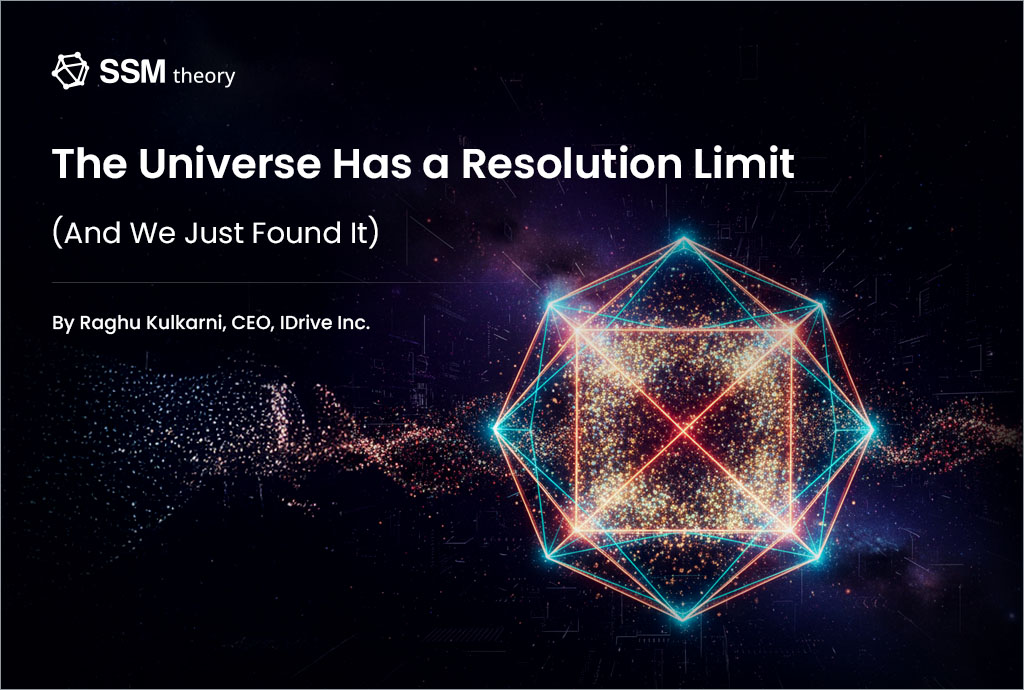
Figure 1: The Shape of the Information Limit. This 12-pointed shape (Cuboctahedron) represents the maximum number of neighbors a point can have in 3D space. It isn’t a physical cage, but a mathematical limit on how dense quantum information can get before it jams.
- Low Bandwidth (Electrons): A single particle requires very little information to describe. It fits easily within the vacuum’s error margins. The ”network” handles it elastically.
- High Bandwidth (You): A massive object like a human contains 1027 particles. The information required to describe your position exceeds the vacuum’s local elastic limit.
The network jams. The wave function collapses not because of magic, but because you hit the informational data cap of that region of space.
We calculated exactly where this cap lies. The limit is approximately 28 micrograms (28µg).
- Objects lighter than this (viruses, molecules) are below the data cap and can behave like waves.
- Objects heavier than this saturate the local vacuum bandwidth and ”freeze” into classical reality.
A Convergence with Penrose
This prediction is not ours alone. Nobel Laureate Roger Penrose (along with Lajos Di´osi) famously predicted that gravity causes quantum collapse near the Planck Mass (≈ 21.7µg). While Penrose arrived at this number via General Relativity, we arrived at nearly the same number (28µg) via pure lattice geometry. The fact that two completely different theories converge on the same ”mass cliff” suggests that this limit is real—and we are about to find it.
3. The Race to the Edge
This is no longer just philosophy. Experimental physicists are currently racing to find this exact data limit. A recent article in Nature highlighted experiments levitating nanoparticles to test where quantum mechanics fails.
They are building tinier and tinier scales to find the exact cliff where the universe’s resolution maxes out. We believe we have already calculated the coordinates of that cliff.
The universe isn’t just a physical object; it is a computational geometry problem. And we have found the packing algorithm.
References & Further Reading
General Theory
The Selection-Stitch Model (SSM) Hub:
idrive.com/ssmtheory
Specific Papers
On the Pixel Size of the Universe:
Geometric Renormalization of the Speed of Light and the Origin of the Planck Scale in a Saturation-Stitch Vacuum
Read on Zenodo (DOI: 10.5281/zenodo.18447672)
On the Mass Limit (28µg):
Discrete Wave Mechanics: Deriving the Mass-Decoherence Limit from Lattice Elasticity
Read on Zenodo (DOI: 10.5281/zenodo.18453492)
The Experiment & Context
Testing Quantum Gravity:
Levitated Nanoparticles for Testing Quantum Gravity
Read in Nature
Penrose’s Prediction:
On Gravity’s Role in Quantum State Reduction
General Relativity and Gravitation (1996)